Home Construction & Remodeling in Fort Collins, CO
Local Custom Home Builder Expertise
In neighborhoods from Warren Shores to Huntington Hills, finding the right custom home builder in Fort Collins, CO matters more than you think. New construction demands local knowledge—from Poudre River lot challenges to HOA design rules in Rigden Farm. We work with families building their dream homes and existing homeowners adding value through thoughtful additions, ADUs, and smart renovations. Every project reflects Fort Collins' mix of mountain charm and modern living.
This page walks you through custom home construction, what to expect at each stage, and how local expertise saves you headaches before they start.
How We Work
Custom home building in Fort Collins follows a clear path: plan, build, inspect, occupy. Each stage has specific decisions and local factors that affect your timeline and budget.
Site & Design
Assess lot conditions, zoning rules, and build a design that works for Fort Collins lot sizes and view orientations. Check for floodplain or setback impacts early.
Permits & Approvals
Submit plans to Fort Collins Planning & Development. They'll review setbacks, drainage, and design fit. Some neighborhoods have stricter review timelines.
Foundation & Frame
Dig, pour foundation, and frame walls. Fort Collins soil conditions vary; we verify drainage to avoid frost heave in winter cycles.
Systems & Finish
Install electrical, plumbing, HVAC, and interior finishes. City inspectors sign off as each phase passes code review. Punch-list details follow.
Final Inspection & Keys
Certificate of Occupancy issued by the city. You get a built home ready to move in with all systems tested and verified.
Post-Build Support
Warranty service, touch-ups, and seasonal checks keep your home running smoothly through Fort Collins' freeze-thaw cycles and dry climate.
You'll always know what's happening next—and when.
Our Services
Whether you're building from scratch in a new subdivision or adding to an established home in Old Town West, we handle every project type.
Custom Home Construction
Build a new home from the ground up in neighborhoods like Huntington Hills, Warren Shores, or Rigden Farm. We design for lot orientation, mountain views, and your lifestyle. Local knowledge of Fort Collins zoning means your design gets approved right the first time.
- Single-family homes tailored to your vision
- Homes in the $400,000 to $800,000+ range
- Energy-efficient builds for Colorado's climate
- Exterior finishes that match Fort Collins character
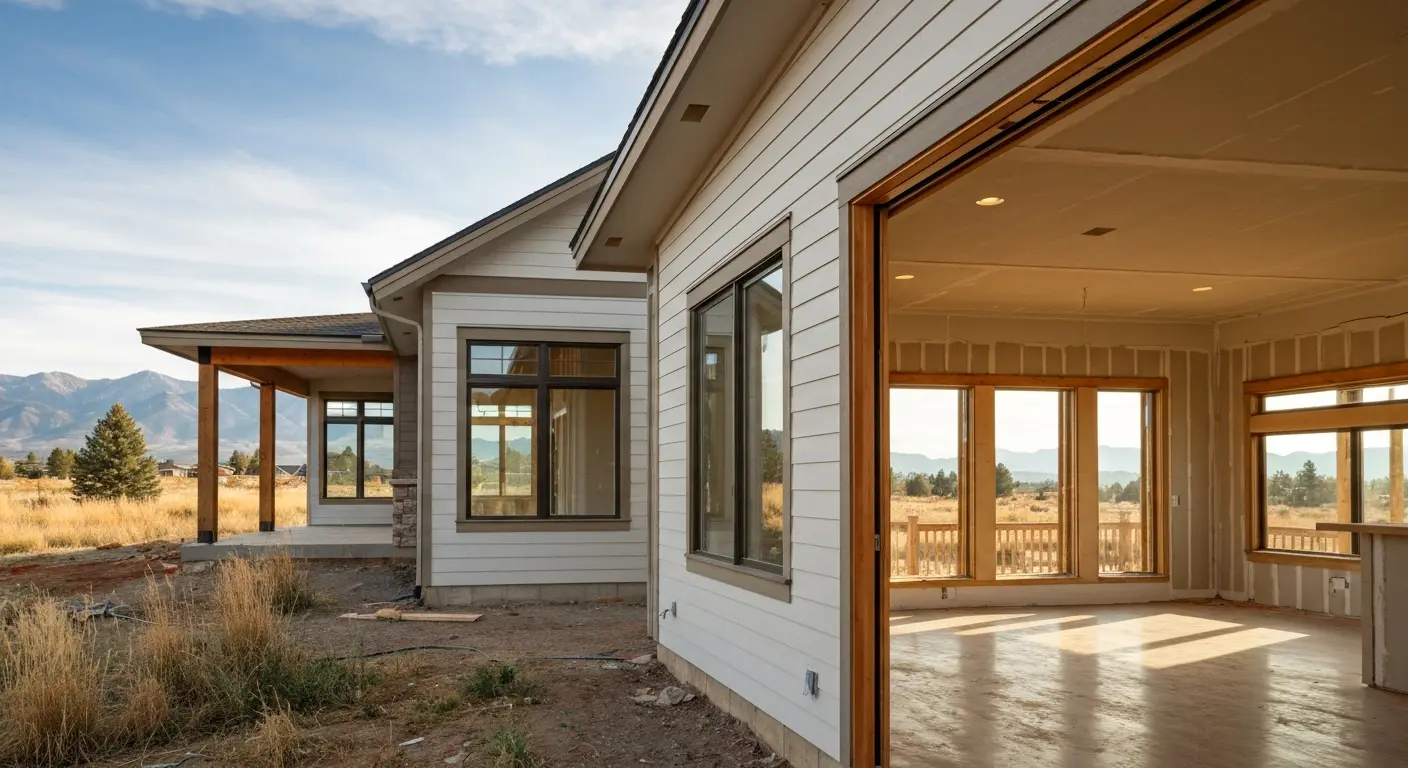
New home build in South Fort Collins with open-concept layout and mountain-view positioning
Accessory Dwelling Units (ADUs)
Add a backyard cottage or garage apartment to your Fort Collins property. New Colorado law (HB 24-1152) makes ADUs possible in most neighborhoods. Our team handles site assessment, design compliance, and all permit coordination with Fort Collins Planning & Development.
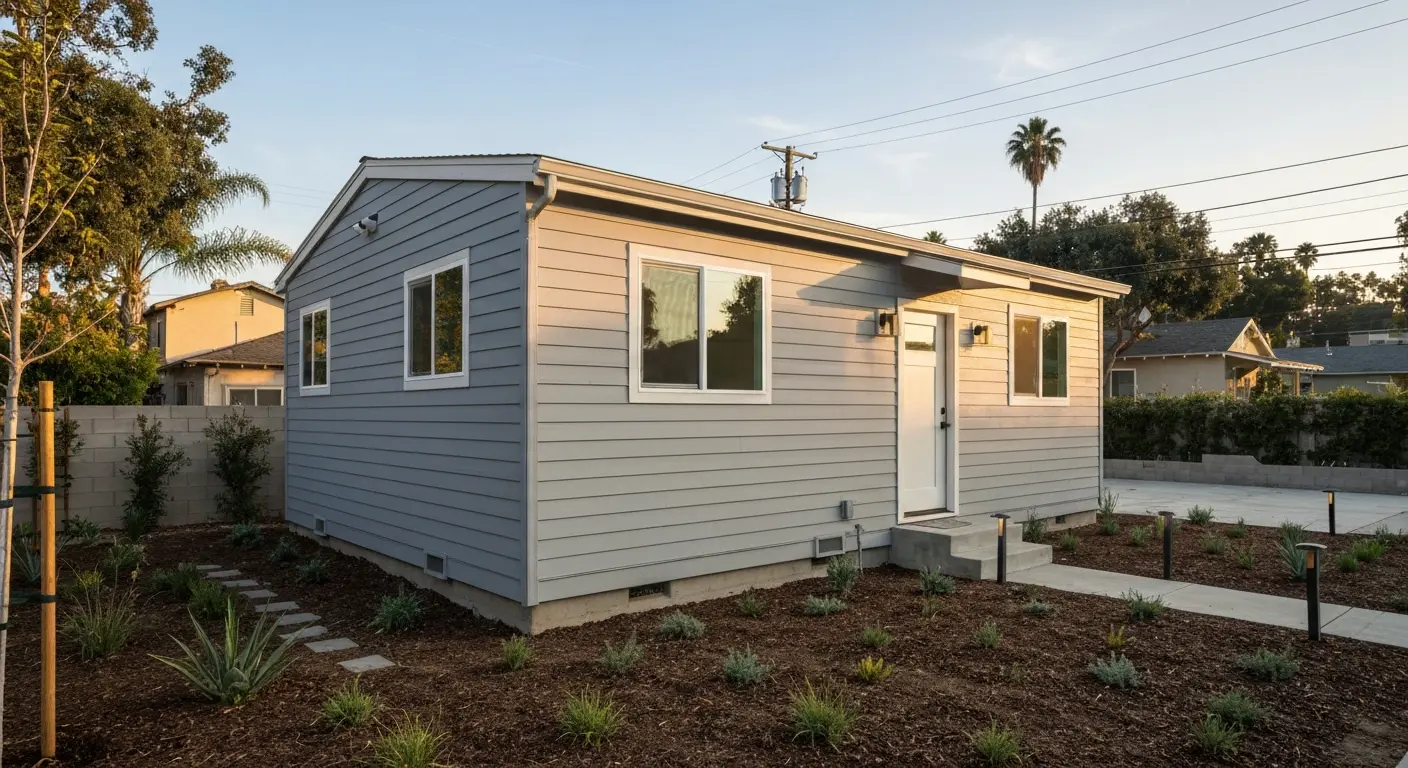
Detached ADU in University Park neighborhood with integrated landscape
- Detached cottages up to 1,000 sq ft
- Garage conversions and second-story additions
- Rental income or multi-generational living
- Design compliance with setback and height rules
Architectural Drafting & Design Consultation
Turn your vision into construction documents. We work with Fort Collins homeowners in every neighborhood—from Old Town West Victorian-era homes to newer builds in Bucking Horse or Waterglen—to create drawings that code officials approve without rework.
- Preliminary designs and feasibility studies
- Code-compliant construction documents
- 3D renderings to visualize your project
- Coordination with permitting requirements
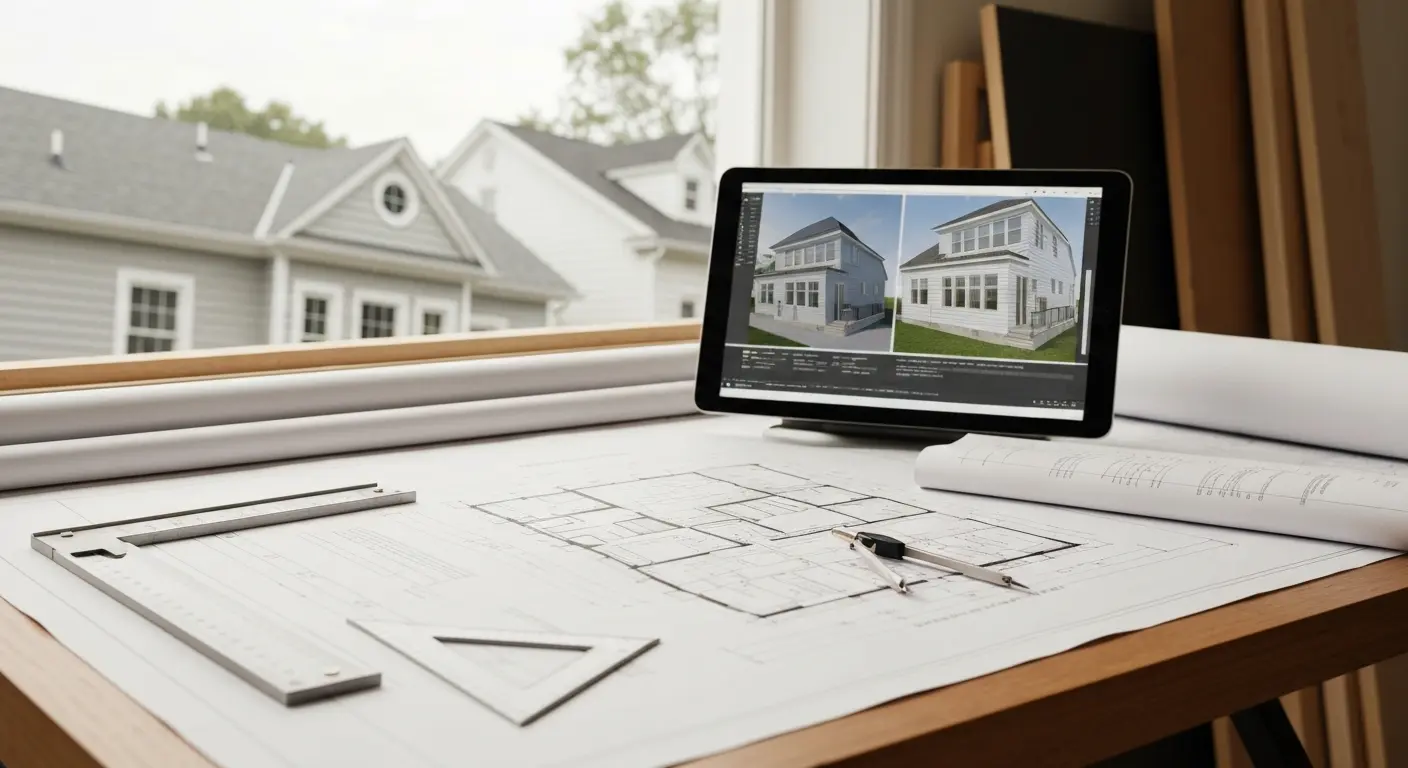
Design consultation for addition in Warren Shores with detail drawings
Project Design Consultation
Before you commit to a project, get clear answers. What zoning applies to your lot? Can you add a second unit? Will the city flag floodplain or setback issues? Our consultations answer these questions so you move forward with confidence.
Site Assessment
Evaluate lot, access, utilities, and site constraints early to avoid surprises.
Zoning & Entitlements
Know what's allowed before you design. Fort Collins has specific rules per neighborhood.
Budget Clarity
Understand permit costs, utility fees, and contingency planning for your market.
Why Local Expertise Matters
Fort Collins is not Boulder or Denver. Building here means navigating specific environmental, regulatory, and geographic factors that affect every decision.
Mountain & Prairie Transition
Designs that work in south Fort Collins (near foothills) don't work on the eastern plains. We factor wind exposure, view angles, and seasonal sun patterns.
Frost & Drainage Cycles
Colorado's freeze-thaw cycles demand proper foundation prep and drainage. We avoid costly mistakes with site-specific soil analysis.
Code & Permit Timing
Fort Collins Planning & Development has unique review workflows. We know which documents move approval forward and which create delays.
Neighborhood Character
Huntington Hills has different design expectations than Rigden Farm. We design homes that fit each community's architectural vernacular.
Wildfire & Environmental Risk
72% of Fort Collins properties face some wildfire risk. Defensible space, material selection, and roof design mitigate exposure.
300 Days of Sunshine
Design for solar gain in winter, shading in summer. Smart window placement and overhangs keep utility costs down year-round.
Expert Practice Note: Fort Collins has been Colorado's fastest-growing city for the past decade. That growth means stricter new building codes and changing inventory patterns. Staying ahead of these shifts keeps your custom home competitive and future-proof.
Coverage Area & Neighborhood Expertise
We serve all of Fort Collins—from Old Town's historic district to newer builds in East Fort Collins. Here's what we know about your neighborhood.
South & Central Fort Collins
Huntington Hills, Warren Shores, Fossil Lake. Established neighborhoods with larger lots, mature trees, and strong HOA standards. Most projects here are full custom builds or significant expansions. Expect design review processes that value architectural consistency.
Downtown & Old Town West
Old Town West, University Park, Old Prospect. Victorian and mid-century homes with smaller lots and street parking. Remodels and ADUs are more common here than new builds. Historic district rules apply; design must respect original character.
East Fort Collins
Rigden Farm, Waterglen, Bucking Horse, Trail Head. New-build communities with modern site plans, mixed housing types, and active trail systems. ADUs thrive here due to newer zoning that welcomes flexibility. Lots tend to be smaller but well-planned.
North Fort Collins & Proximity Growth
Maple Hill, North College areas, Timnath transition. Rapid expansion zone. Custom home opportunities here often include large acreage parcels and fewer restrictive HOA rules. Permitting can move faster than in established neighborhoods.
Frequently Asked Questions
What's the first step if I want to build a custom home in Fort Collins?
Start with a site assessment and zoning check. We evaluate your lot, confirm what the city allows, and identify any environmental constraints (floodplain, wildfire risk, setbacks) before design begins. This consultation clarifies feasibility and budget.
Can I build an ADU in my Fort Collins neighborhood?
Colorado House Bill 24-1152 allows ADUs in most single-family zones across Fort Collins. Maximum size is 1,000 square feet. Fort Collins welcomes ADUs on single-family lots; local zoning must be verified for your specific property.
How does Fort Collins permitting work, and what's the typical approval path?
Submit plans to Fort Collins Planning & Development with all required site diagrams, setback documentation, and floodplain certifications. They review against City Code and Building Standards. Most reviews take 2–4 weeks if documentation is complete; incomplete submissions cause delays. We prepare documents to pass on the first round.
What happens if my lot is in a floodplain or has setback constraints?
Floodplain properties require an additional floodplain use permit and may need elevated floors or modified site plans. Setback violations mean redesign. We flag these early so you make informed decisions about buildability and layout adjustments before committing funds.
Do historic neighborhoods like Old Town West have special design rules?
Yes. Old Town West and parts of Old Town are designated historic districts. Exterior changes—additions, roof work, siding—go through design review focused on architectural compatibility. Interior work is usually unrestricted. We coordinate with Fort Collins Historic Preservation Office to ensure design approval.
Are there specific design guidelines for neighborhoods like Huntington Hills or Rigden Farm?
Huntington Hills emphasizes large traditional homes with established landscaping; Rigden Farm favors modern, efficient designs integrated with the mixed-use village plan. Each neighborhood's architectural standards are unique. We design to match each area's character and HOA expectations.
DISCOVER WHAT OUR CUSTOMERS HAVE TO SAY ABOUT US
REVIEWS
proudly serving these areas
Fort Collins, CO
Wellington, CO
Livermore, CO
LaPorte, CO
Red Feather Lakes, CO
Windsor, CO
Loveland, CO
Berthoud, CO
READY TO take the next step?
get a free quote TODAY!

QUICK LINKS
our services
service areas
operating HOURS
Mon: 8:00 am - 5:00 pm
Tue: 8:00 am - 5:00 pm
Wed: 8:00 am - 5:00 pm
Thu: 8:00 am - 5:00 pm
Fri: 8:00 am - 5:00 pm
Sat: Closed - Closed
Sun: Closed - Closed